
Perception vs. Reality: Don’t Compromise

IMG_2726
“If you limit your choices only to what seems possible or reasonable, you disconnect yourself from what you truly want, and all that is left is compromise.” – Unknown

Happy Monday! My post last week was about continuously pushing forward and keeping a goal in mind. Today, I wanted to also focus on personal perception versus true possibility. The weeks when I struggle most are the times when I get in my own head and think about things in a negative manner. I find that I start to have less confidence in myself or second guess decisions I’ve made. A great example would be that I’ve been wanting to travel to the Upper Peninsula of Michigan for a while; but scheduling conflicts seemed to push that possibility farther and farther away. I was bummed because my friend’s schedules wouldn’t allow for a vacation when I wanted to go. So I told myself, “Lauren, it’s just not in the cards right now. You can go another time.” I had limited my vacation potential because others weren’t available. While I laid in bed a few days later, I asked myself, “Would it really be terrible to travel alone?” I’ve been living alone for a few months now; the thought was foreign but not overwhelming. So last week I took the plunge and chose to book my first solo vacation.

There are many cases where it’s great to travel with others. It certainly reduces the cost of your travel expenses and you always have someone to do activities with. In this case, I wanted to travel to escape my day to day life. My vision was to spend time on a beach where I could relax; but I also wanted to get out and enjoy some outdoor activities that I haven’t had a chance to do this year. The thought of traveling alone was a little scary because I’ve never done it before; but it slowly started to seem like a better idea. By traveling alone, I didn’t have to take other people’s preferences into consideration. I booked a small dated cabin (with great reviews) through Airbnb. I don’t need to stay in a glorious hotel when I plan on being outside most of the time. Plus here I walk out the door to the beach and basic necessities (silverware, plates, bedding, etc.) are included. I also knew that I wanted to explore Rocks National Lakeshore but didn’t necessarily know if I’d feel safe hiking by myself. I started looking into group tour options that I could sign up for. I found a site seeing tour where I will be participating in a 6 hour, 14 mile kayaking trip to see all the rock formations that were on my wish list. From there I’ll then take a 2 hour hike to experience the gorgeous surroundings and natural waterfalls until we reach our muster point 2 miles away. Some other activities I plan to do are group lighthouse tours and a winery tour and tasting. Since these activities are in group settings, I’ll be able to have interactions with others without feeling alone. I’ll also get the “me” time that I want while I read and write on the beach.

I have a limited travel budget since I’m trying to pay down bills so I had to do my research before booking. Since I’ll be traveling around a holiday, I found that a lot of Hotels/B&Bs were expensive (some up to $175/night). I did my research and found that this experience could be affordable even though I was on a budget. I was able to keep my costs so low because I chose activities and areas that were reasonably priced. The cabin in Escanaba is approx. 1 hour from the national park that I planned on visiting. I was able to get a lakefront cabin (sleeps 4-5) for $90/night + taxes and fees. I can literally walk out of my door to a private beach with chairs and a fire pit. After my lodging was planned, I moved on to figuring out the my activities for the trip. Kayaking and hiking were a must and there were 3 main companies that did both types of tours in a combined package. I chose a package that required me bring my own lunch, water and snacks. By packing my $4 worth of food, I’ll be saving $85 on the overall tour! Yes, this price includes all necessary gear (minus water shoes that I already have)! To my surprise, I found that the lighthouse tours near Escanaba were extremely reasonable. One tour was completely free with a reservation and the other was $3/person. $3 total for a few hours of my time? I’ll take it! I also love wine; so whenever I travel, I look for the nearest winery to get my grape time on! Get it grape time? Yes, I’m corky! Okay, I’ll stop with the wine puns. Escanaba has a popular winery in their downtown area. The amount I spend here will be determined by how much I drink. Based off their prices, I’m expecting to spend between $20-30 for about 2 hours of my time. To reduce my food costs I’ll be packing breakfast and lunch options. This will keep my meal costs super low and give me wiggle room to eat out for 2-3 nights without blowing my food budget for the month. I also need to take into consideration gas and tolls. I usually travel about 900 miles in a month and that generally costs me around $120. Since this trip will have similar mileage, I’m expecting to spend $120-140 in gas/tolls. Let’s map out these costs so we can see a grand total:

Cabin $332
Kayaking/Hiking Tour $125
Lighthouse Tour 1 $3
Lighthouse Tour 2 Free
Winery Tour/Tasting $20-30
Food/Drinks $60
Gas/Tolls $120-140

Trip Total: $535 – 565

Could this trip be way less expensive if I went with people? Hands down the answer is yes! My lodging and gas costs would be cut in at least half or more. But the point is that I have the ability to travel on my own and I didn’t let scheduling conflicts prevent me from doing something that is 100% possible without other people. I changed my mindset to think outside of how I normally think and came up with a solution to make myself happy. While the quote above doesn’t only apply to a travel scenario, it’s important to remember that you are the only person that can limit yourself. If you think it’s possible, then you will find a way to make it happen. If you truly want to do something, whether it be in your personal or professional life, you shouldn’t compromise! Reach for what you want. If people tell you you’re crazy, look at them, smile and say, “I’m not crazy, I just believe in myself.”
Meal Planning = $avings

IMG_2700

Image Link

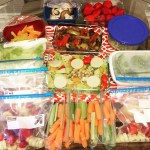
One area where I know I rule my budget is in the grocery category. I’m a boss at meal planning and I wanted to share how simply planning meals can help eliminate unnecessary spending when you go grocery shopping. I live on my own, so realistically I only need to cook 2-3 “types” of meals and I eat leftovers for the rest of the week. Some of you will go through groceries faster and can have more variety. This week was one of those times where I knew I wasn’t really going to be home much so I opted for larger portions of a few easy meals. Feel free to adjust this plan to your lifestyle and try it out before your next shopping trip. By knowing your menu and ingredients for the entire week, you’ll be able to go to the grocery store with confidence and not buy items that aren’t on your list. It’s important not to over plan. When I first began meal planning, I scheduled it like I had to cook every night. You don’t; just be aware of how many servings you’re preparing and I promise you’ll spend way less.

Here is my Meal Plan for the week:

Day 1 Day 2 Day 3 Day 4 Day 5 Day 6 Day 7
Breakfast Smoothie Smoothie Smoothie Smoothie Waffle w/ peanut butter and fruit Waffle w/ peanut butter and fruit Smoothie
Snack Apples and peanut butter Apples and peanut butter Apples and peanut butter Apples and peanut butter Apples and peanut butter Apples and peanut butter Apples and peanut butter
Lunch Veggie fajita bowl Chickpea avocado salad Chickpea avocado wrap Veggie fajita salad Chickpea Avocado Wrap Large Salad Large Salad
Snack Carrots, Celery, hummus Broccoli, grape tomatoes, hummus Carrots, celery, hummus Broccoli, grape tomatoes, hummus Carrots, celery, hummus Broccoli, grape tomatoes, hummus Carrots, celery, hummus
Dinner Large Dinner Salad Veggie fajita wrap Large Dinner Salad Chickpea Avocado Wrap Large Dinner Salad Asian Stir-fry Asian Stir-fry


Now that you’ve had a chance to see my meal plan, I want to break down what all of these meals will cost.

Meal Totals for the Week:

  • Day 1: $5.78
  • Day 2: $5.52
  • Day 3: $4.90
  • Day 4: $5.98
  • Day 5: $4.81
  • Day 6: $4.06
  • Day 7: $4.10

Weekly Meal Cost = $30.34

By using this planning method, your entire week will cost you $30.34! You could spend that going out to dinner for only one night! Your grocery shopping trip will realistically cost more than that because some of these items, like condiments, tortillas, etc. will last longer than the one week period. Happy planning!


11 Steps to Achieving Financial Freedom

SaveAfter I came to terms with the fact that my life was in financial disarray, I began researching different solutions online. Every source had different suggestions for ending the debt cycle, but I found that these 11 steps worked the best for me.

1. Admit that your debt has gotten out of control and change is necessary.

If you attend any meeting related to addiction, they will tell you that admitting you have a problem is key to moving forward. I knew that my debt had gotten out of control the day I received my first student loan bill. It was way higher than I had anticipated because I wasn’t taking into consideration all the interest accumulating while in deferment. Add in my desire to live a life outside of my means and I had a recipe for disaster. I knew I was in over my head, but I didn’t do anything to change it. I just let the interest build and my debt continued to increase. My “ah ha” moment came about two years ago when I began turning down traveling and going out with friends. This wasn’t because I didn’t want to go, but due to my credit cards being maxed and no longer having disposable income. Not exactly the most favorable place to be in.

The first thing I did was make a change to better my finances. At that time, I was an IT recruiter (which wasn’t really my cup of tea). I found it hard to stay motivated and a lack of motivation on a draw payment system just doesn’t work. For those of you that aren’t familiar with what this is, you receive an allotted amount of money per month, but you are 100% commission based. If you don’t hit your targets then you go into a deficit and owe money the following month. But if you exceed your goal, then you can make bank. While the pay outs could be excellent, this just wasn’t the type of sales job where I felt I would make waves. I decided that I needed a career change and strategically went back to a life in hospitality. I knew I would have an hourly wage + tips and more financial stability. While this wasn’t a long term solution, I knew that it would pay my bills while I looked for a higher paying corporate position. Long story short, this strategy worked out in my favor because the restaurant let me stay part-time after I found my current full –time job. This provided an extra stream of income and a light at the end of the tunnel that I was desperately searching for.

2. Track your expenses.

Well ladies and gentleman, I like to spend money! Shocker, I know; especially for those that have reaped the benefits of countless rounds of shots on my behalf. While I like to be generous sometimes, I have also come to the realization that I needed to begin living within my means. I had a lot of money going out and I wasn’t really sure where it was going. Instead of altering my spending, I decided that I wanted to track my spending to determine where my “income” was going outside of my fixed expenses. To do this, I didn’t use any cash for a month and only made purchases with my debit card or credit cards. At the end of the month I tallied my totals and was absolutely shocked at what I found. Here are just a few examples of where my money was going:

  • $400 eating/drinks out
  • $250 groceries
  • $300 Feminine Grooming (Hair, Nails, Wax, Eyebrows, etc.)
  • $60 Massage Envy Membership
  • $130 Gas
  • $40 IPass
  • $10 Sirius XM

Notice how this list doesn’t even include my car payment, insurance, credit cards or loan payments. No wonder I was going for broke! I knew that these were the areas where I may be able to find cost savings so I decided to look at these items further.

3. Evaluate expenses and determine what’s unnecessary.

Spending $650/mo for food/drinks is excessive and I knew I could cut this down to save money. The easiest way to do this was to eat out less. I was averaging about $50/week just on eating out during my lunch hour. I took the extra 10 minutes to prep a salad or sandwich which resulted in $200/mo saved! Since I was eating out so much, a lot of my grocery budget went in the garbage because food would go bad. Meal prepping is an excellent way to buy less groceries and save money. Between meal planning and making sure I look at sales papers, I generally spend between $130-175/mo on groceries! That’s a huge savings. Cutting down my “grooming” expenses hurt a little; just because it’s my relaxation time. Needless to say, I made changes like doing my own nails or splurge and go once a month instead of twice a month. I’ll stretch my hair appointments out for an extra week or two. By stretching the clock, you could save yourself a few services a year which can total to hundreds in savings throughout the year. I couldn’t eliminate Massage Envy yet. I was kicking myself for signing a contract with them, because I never use my services. Needless to say, I knew that expense would be eliminated completely at the end of the contract period. My expense for gas doesn’t fluctuate too much due to my work commute. I was able to pinch pennies by avoiding filling up on the weekends and using rewards programs for my favorite gas stations. I’ve found that prices tend to be the best on Tuesdays and Wednesdays (my personal opinion). I also use an app called Gas Buddy, to see which locations have the lowest price gas in the area. It may only be a few cents of savings, but in the end it adds up.  I don’t think anyone in the state of Illinois enjoys paying tolls but having an IPass is necessary to travel our lovely highway system. I’m not a morning person, but by leaving just 15 minutes earlier, I was able to essentially wipe out this expense. I loved my Sirius XM radio and truly miss my friends on the Highway and Hits1. Needless to say, I got rid of my satellite radio and went back to old fashion FM radio stations to eliminate this expense. With all these moderations, I ended up saving approximately $450/mo.

4. Create a budget.

After I knew where I could cut costs, I knew that I needed to create a budget to stay on track. The last week of every month, I’ll sit down and write a list of my estimated expenses for the entire month and set aside specific amounts of money for entertainment, grooming, gas, bills and savings. I recommend doing this monthly because “extra” expenses come up from time to time. For example, I currently have to pay for a quarterly parking permit. This will only be in my budget every 3 months. You should also factor in vehicle registration or annual memberships. Those need to be worked into your budget as well. A helpful tool that I started using is the Mint app. It allows me to not only track my spending, but it monitors budgets and provides updates for how I’m doing each month. Not only that, you can link accounts and receive payment reminders so you’re never late. I also set up personal savings or debt progress goals and it will keep statistical data to show my progress throughout the year.

5. Establish your debt payment method: Avalanche, Snowball or Avaball.

There are two main types of debt payment methods: Avalanche and Snowball. The avalanche method tackles debt with the highest interest rates first; while the snowball method tackles debt with the lowest balances. I’ll provide more detailed information on these methods in a separate post. While the Avaball method is not a real method, I found that a combination of both worked for me for a few reasons. I had a few lines of credit with zero interest that needed to be paid off within a 6mo-12 mo time frame. I organized these debts lowest to highest amount so I could get rid of these first. Then I plan to utilize the avalanche method to save money long term on interest.

6. Create a vision board.

You’re more likely to stick with a plan and reach a goal if you have a constant visual reminder of what you are trying to achieve. My board includes my debt amount, inspirational quotes, dream vacations and a thermostat with dollar amounts so I can see my progress. It feels good when you can feel yourself getting closer and closer to you goal. Plus having your dreams visually in front of you can give you the extra motivation on days when you’re struggling to stay on budget.

7. Actively remind yourself that life is improving.

Trying to get out of debt isn’t easy. Some days you feel like your drowning and may feel depressed because you’re having to give up things. Remember that every smarter purchase you make and every extra dollar you put towards bills will get you closer to being debt free. I follow Simon Sinek the author of Start With Why and Leaders Eat Last. He sends out daily motivational messages that help give me the pick me up that I need at times. It might sound cheesy, but in the morning, I look in my mirror and tell myself that every day I wake up I am one step closer to my goal. Finding your own daily inspiration will turn your drive to achieve financial freedom into a routine and normal part of daily life.

8. Reward yourself for reaching your goals.

Paying off debt is a lot of work and you should reward yourself for every milestone that you hit. Now that doesn’t mean splurge and go on an expensive vacation every time you pay off a credit card. If you hit a milestone, get that mani/pedi, go out to a nice dinner, get drinks, buy that pair of shoes you’ve been eying, or maybe treat yourself to some other reasonable item that you’ve been wanting. The point is that your rewards shouldn’t hurt your goal but should be something that makes you personally feel good.

9. Seek cost savings with everything that you do.

This might seem like an obvious step, but it’s the one that it the hardest to follow. This requires prep work and evaluation. You’ll find that because your spending habits have been engrained, you may say, “Well it will be okay just this once.” Wrong. It’s not okay, because it’s easy to fall back into old habits. A few ways that I’ve found cost savings would be through couponing and looking through sales papers. Make sure you look at multiple stores before you decide where you’re going to do your grocery shopping and buy items where they are the least expensive. If possible print manufacturer’s coupons before your shopping trip. You can also stack savings by using rebate apps on your phone. One place I love to do this is Target. I signed up for a Target debt card so I receive 5% off my entire purchase; but I can still pair it with Cartwheel savings, Manufacturer’s coupons and then scan my receipts for rebates on my phone with the Ibotta or Check 51 apps. I’ve had shopping trips where I’ve saved over $20 just by using this method. It’s completely worth it. I also make a list of items I need before I go to the store. If it’s not on the list, I don’t buy it. Don’t be afraid to buy generic brands. We are conditioned to purchase brands that we know, but did you know that a lot of the generic brands are basically the same product with a different label? If this makes you nervous, just compare labels to ensure the ingredients are up to par. Also, don’t underestimate the power of savings in a dollar store. I buy all of my cards, party supplies and cleaning supplies from here and I save a ton of money. They even accept some manufacturer’s coupons. Shopping aside, let’s say you plan to travel this year; you can book through a discount site or get the best deal by booking through a private owner directly. Look for vacation rentals by owner and you can save hundreds if not thousands.

10. Take those credit cards out of your physical and virtual wallets.

One of the quickest ways to accumulate debt is through the use of credit cards. It’s easy because the money you’re spending isn’t coming directly out of your account. You’re less aware of the total amount you are spending and the bill at the end of the month can be higher than anticipated. To avoid going further into debt take those cards out of your wallet and put them in a safe place. By simply not carrying them, you’ll be more aware of the money you are spending and less likely to purchase items you don’t need. A lot of us have sites that we love to use regularly. Remove your card information from all websites. Having to grab your card and re-enter your information will be an inconvenience and will give you extra time to review and evaluate the money you’re about to spend. 8 times out of 10, I’m willing to bet you’ll scrap your cart and get those items at another time. This is also handy with online food orders. We all get lazy and don’t want to cook at times, but not having card information entered will make it increasingly more difficult to place that quick order on your drive home or maybe even when you’re a little tipsy coming home from the bar.

11. Start a rainy day fund.

When you’re in debt and living paycheck to paycheck, the amount of stress you feel is overwhelming at times. Having some money on the side can help to eliminate a lot of stress and also can help during emergencies. I opened a second account. A lot of banks will give you a bonus just for trying them out. I was able to save my first $100 just by going to a new bank. I began putting in $20 from every paycheck, because at the time that was all I could scrape together. $40/mo isn’t much, but since I never looked at the account, the money kept accumulating. I also sold some old clothes to Plato’s Closet and through the LetGo and OfferUp apps. Instead of spending this money, I chose to add this cash to my account. I also did a few side jobs when I was able to. As time went on, I was slowly able to put more money aside from working two jobs. Hitting the $1000 mark in a savings account feels great and if an emergency happens you have the security of knowing that you have some money on the side.

These tips take time, but with the right mindset and motivation, you’ll be feeling relief sooner than you think!